

Spanish menus name tuna by the cut, not by the fat level, so a list that says ventresca, descargamento or tarantelo can leave a visitor guessing. The names come from the butchery of wild Atlantic bluefin from the almadraba, caught in fixed nets off Cádiz from April to June and, outside those months, served after deep-freezing at minus 60 degrees. Here is how to read the cuts, and what each one is good for.
What do the tuna cuts on a Spanish menu mean? Ventresca is the fatty belly, 10 % of the fish, and holds the otoro; descargamento is the leanest, deep-red loin, used raw or as mojama; solomillo, plato and tarantelo are grill cuts; morrillo, from the neck, is grilled or roasted; and the cola, the tail, goes into stews, tartare and croquettes.
A menu decoder for almadraba tuna
| On the menu | What it is | How it comes |
|---|---|---|
| Ventresca, barriga | Belly, the fattiest cut; includes otoro | Raw, grilled, stewed, cured |
| Descargamento | Lean dark loin, deep red | Raw, tartare, mojama |
| Tarantelo | Above the belly, the most balanced fat | Grilled |
| Solomillo | Dark loin by the skin, very fatty | Grilled |
| Morrillo | Neck, gelatinous fat | Grilled or roasted |
| Parpatana | Where head meets loin, meat on the bone | Raw, roasted, grilled |
| Cola blanca, cola negra | Tail | Tartare, stews, croquettes |
| Facera | The “cheek” | Stews |
If you know Japanese menus: otoro is the most marbled part of the ventresca, about 30 % of it, which makes it roughly 3 % of the whole fish. That is why it runs out first.
How the almadraba works, and why it is frozen
The almadraba is a maze of nets anchored near the shore that intercepts the tuna as they cross from the Atlantic into the Mediterranean between April and June. It survives at Barbate, Zahara de los Atunes, Conil and Tarifa, and goes back to the Phoenicians, who salted the catch.
To serve it year-round, Petaca Chico butchers the fish on a factory ship beside the nets, a process called ronqueo that uses almost 100 % of the animal, and freezes it at minus 60 degrees, the system Japanese fleets use on long voyages. So bluefin in December is frozen by design, and it should be.
Tasting it in Malaga
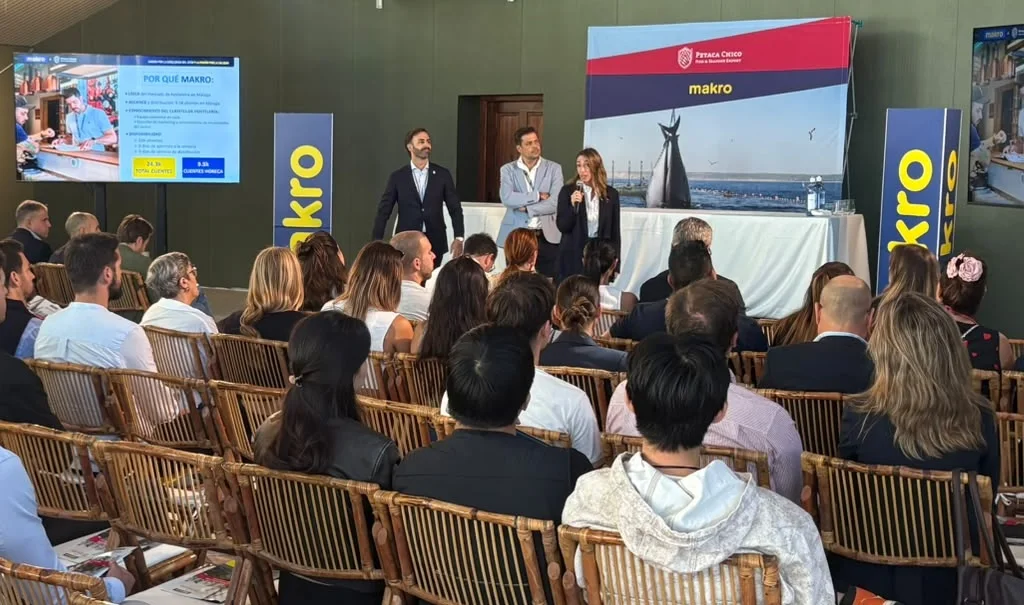
Raw is the easiest way to compare several cuts: the Japanese restaurants in Malaga and the city’s Michelin-starred tables are the places to look for it as sashimi or tartare. At the October 2026 launch of the Makro and Petaca Chico partnership, chef Luis Callealta cooked six dishes that show the range, from seared ventresca sashimi and a descargamento steak tartare to a cold Malaga soup topped with tuna tartare and tail croquettes.
Buying it to take home
Since 26 October 2026, Makro is the exclusive distributor in Malaga province of Petaca Chico’s Almadraba brand, but Makro sells to the trade. For home cooking, Petaca Chico has an online shop and shops in Cádiz and Zahara de los Atunes. Frozen tuna has to stay frozen, so having it delivered at home is usually the practical choice. Malaga’s own catch is another story: the fish auction and Atarazanas market sell the day’s local fish, explained in where Malaga’s fish comes from.
Frequently asked questions about almadraba tuna
What is ventresca on a Spanish menu?
The belly of the tuna, its fattiest part and about 10 % of the fish. The most marbled section of the ventresca, around 30 % of it, is what Japanese restaurants call otoro. Ventresca works raw, grilled, stewed, roasted or cured.
What is almadraba tuna?
Wild Atlantic bluefin caught in a maze of fixed nets set close to the Cádiz coast at Barbate, Zahara de los Atunes, Conil and Tarifa, from April to June, as the shoals pass from the Atlantic into the Mediterranean. The method dates back to the Phoenicians.
Is almadraba tuna fresh or frozen?
Fresh only in the April to June season. The rest of the year it is frozen at minus 60 degrees, a Japanese deep-freezing method that Petaca Chico starts on a factory ship beside the nets, so restaurants can serve it in winter.
Can I buy almadraba tuna in Malaga?
Restaurants buy it through Makro, which since October 2026 has distributed Petaca Chico’s Almadraba brand exclusively in the province. For home cooking, Petaca Chico sells cuts through its online shop and in its shops in Cádiz and Zahara de los Atunes.
Belly for raw, loin for the grill, tail for the stew.